
Recovery, Rest, and Adaptation
The timeline of supercompensation, glycogen resynthesis, and central fatigue.
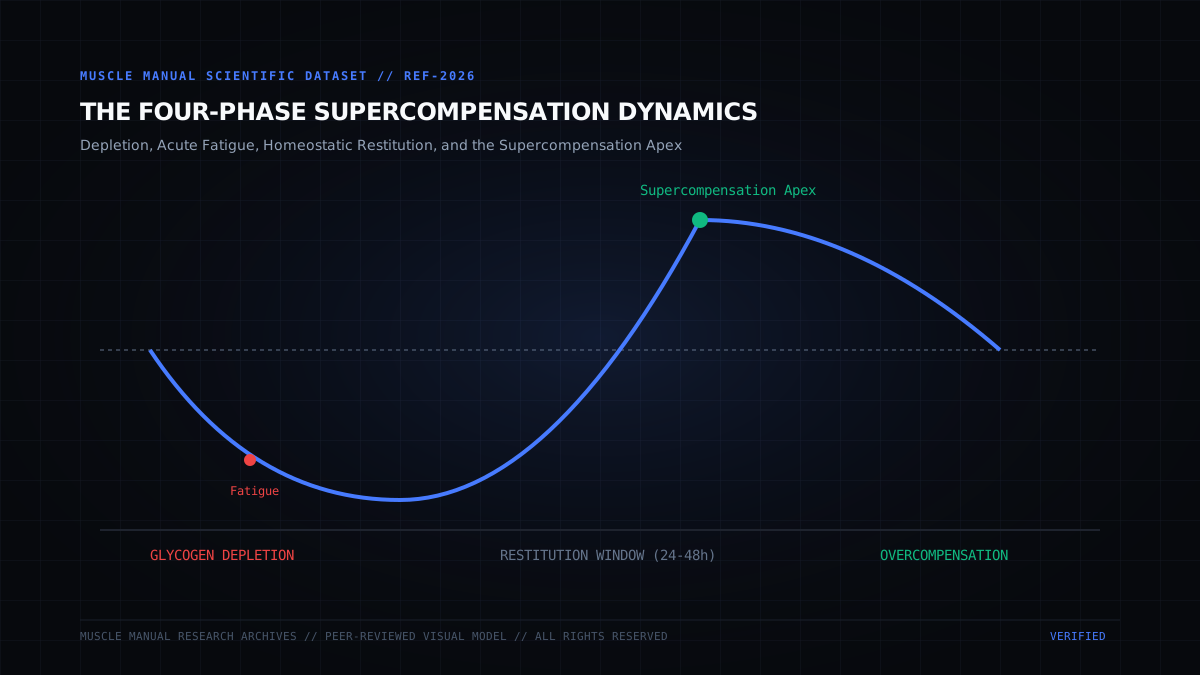
- 1Supercompensation occurs only when the recovery duration allows tissue repair and energy restoration to exceed baseline before the next training stimulus.
- 2Glycogen resynthesis requires 24 to 48 hours following exhaustive depletion, governed by carbohydrate availability and GLUT4 transporter activity.
- 3Central nervous system fatigue involves spinal and supraspinal motor cortex inhibition that often outlasts local muscular soreness.
- 4Cold water immersion directly following resistance training blunts anabolic signalling; thermal modalities must be timed according to adaptation goals.
The Supercompensation Paradigm
In classical exercise physiology, training acts as a catabolic stressor. A heavy training session damages sarcomeres, depletes cellular glycogen, disrupts calcium homeostasis, and transiently diminishes performance capacity.
The body responds to this disruption through four distinct phases: homeostatic disruption, acute fatigue, recovery, and supercompensation. During supercompensation, biological systems build temporary excess capacity to withstand future exposures of similar magnitude.
If the subsequent training stimulus is applied too early (during incomplete recovery), fatigue compounds and performance deteriorates into overreaching. If applied too late, supercompensation decays back to baseline. Optimizing progression requires matching stimulus density to the specific adaptation timelines of individual biological tissues.
Central versus Peripheral Fatigue
Athletes frequently conflate delayed-onset muscle soreness (DOMS) with complete recovery. DOMS is caused by microtrauma to the extracellular matrix and localized inflammatory response in pain-sensing nociceptors; it correlates poorly with functional motor unit output.
Fatigue consists of two distinct components. Peripheral fatigue occurs distal to the neuromuscular junction, caused by impaired excitation-contraction coupling, inorganic phosphate accumulation, and glycogen depletion. Central fatigue occurs in the brain and spinal cord, characterized by reduced voluntary activation: a decrease in the firing rate and recruitment of motor units during maximal voluntary effort.
Central nervous system fatigue typically peaks 24 to 48 hours after heavy compound lifts, particularly movements with substantial spinal axial loading like deadlifts and squats. A lifter may report zero localized muscle soreness while still exhibiting a 15 percent deficit in motor cortex voluntary activation.
The Cold Water Immersion Trade-Off
Post-exercise recovery modalities must align with the intended adaptation. Cold water immersion (ice baths at 10 to 15 degrees Celsius for 10 to 15 minutes) reliably blunts muscle soreness, reduces acute swelling, and accelerates parasympathetic restoration.
However, multiple clinical trials, notably by Roberts et al. (2015) and Peake et al. (2017), have shown that immersing limbs in cold water immediately following resistance training blunts the phosphorylation of p70S6K and suppresses long-term muscle hypertrophy and strength gains. The acute inflammatory response triggered by lifting is the very biological signal that directs satellite cell activation and structural remodeling.
Cold water immersion is beneficial during multi-game sports tournaments where acute next-day performance is paramount, but counterproductive during hypertrophy training blocks.
Primary Research & Citations
2 Peer-Reviewed SourcesThis investigation was produced without commercial interference or brand sponsorship. Report factual corrections to [email protected].
Editorial charterRelated Investigations
The Science of Stress Recovery
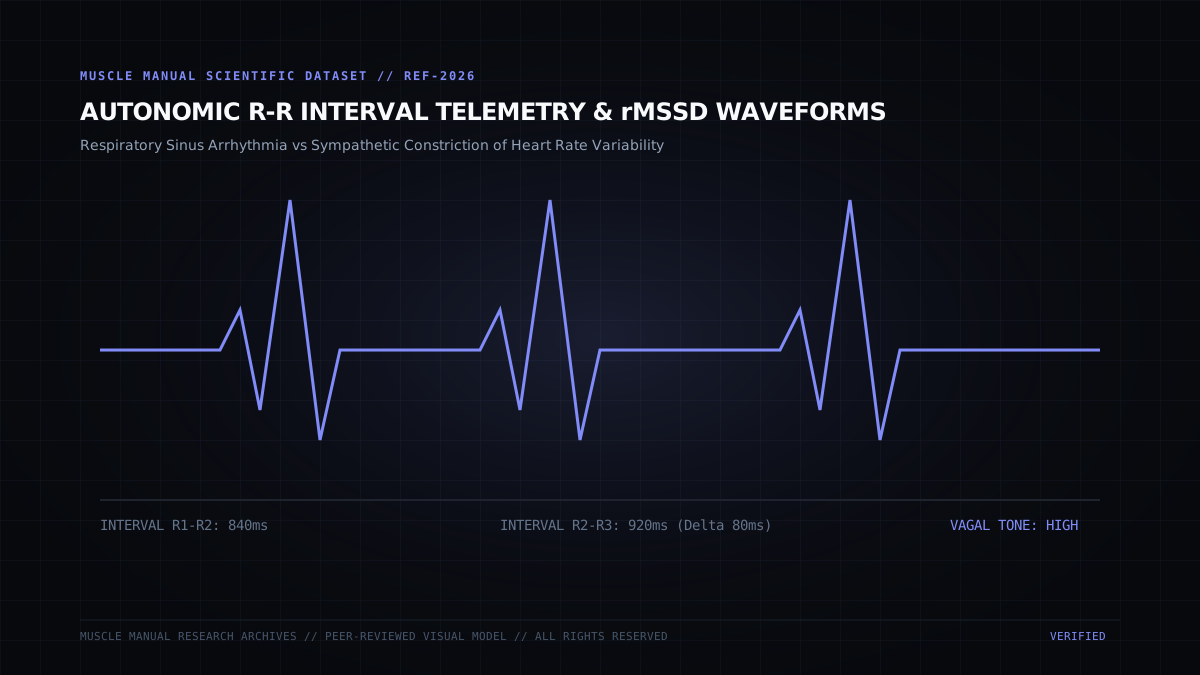
Training, career demands, and psychological tension draw on the same central physiological reserve. Understanding allostatic load and autonomic tone determines whether an athlete adapts or deteriorates.
The Real Protein Question
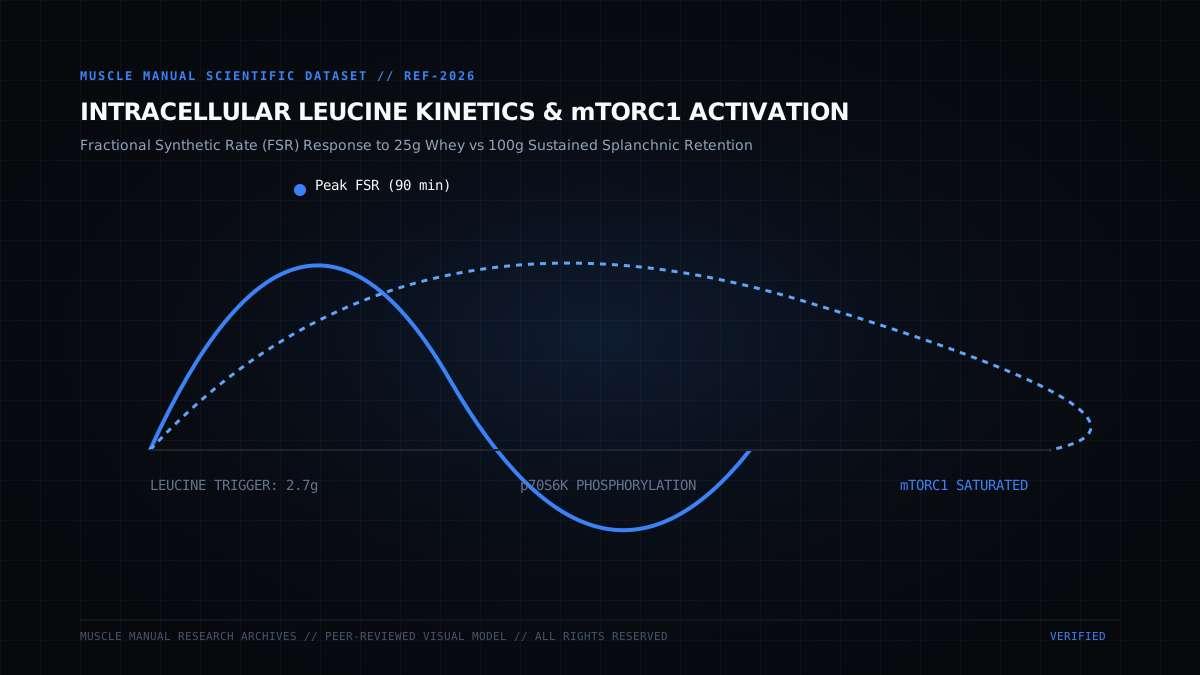
The debate over total daily protein intake often ignores the biological kinetics of amino acid oxidation, per-meal leucine thresholds, and the difference between survival minimums and optimal tissue retention.
Training After 40
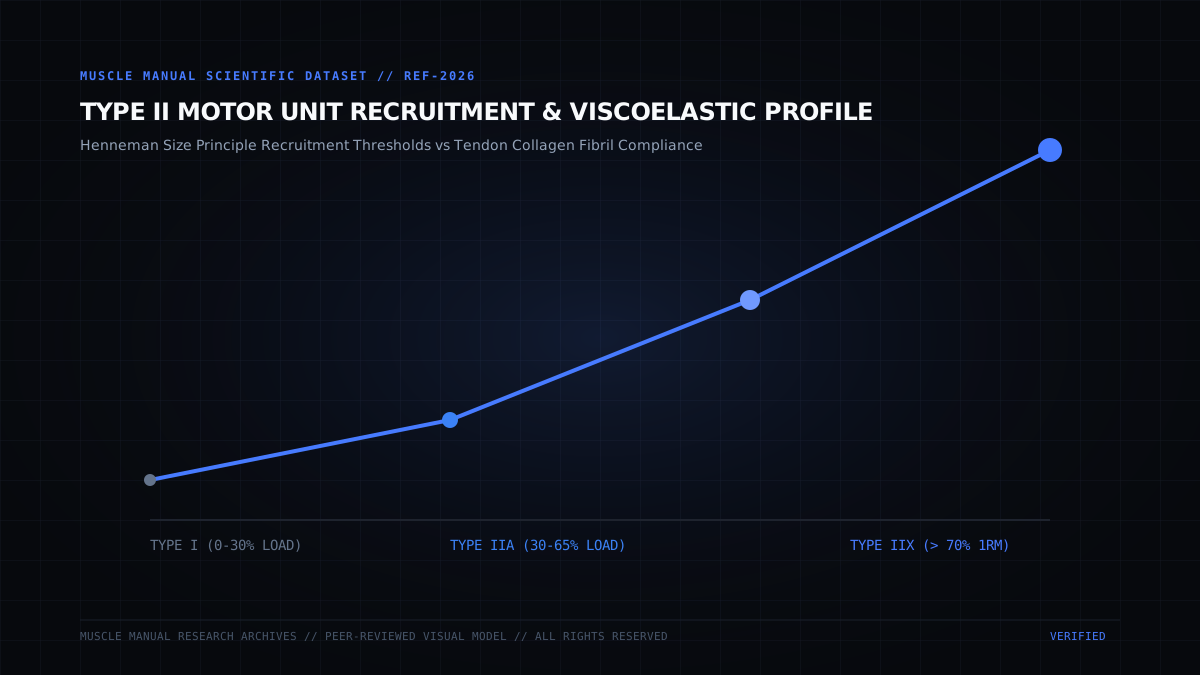
Lifelong strength does not require abandoning heavy compound lifts after 40. It requires understanding changes in tendon collagen cross-linking, joint lubrication, and managing intra-session volume to sustain high output for decades.